There are moments in life where people ask where you were. The moon landing is one, England winning the World Cup in 1966 is another, as was the turn of the millennium. Then, for a generation raised on Girl Power, there was the day Geri Halliwell walked out on the Spice Girls.
For one community, an earthquake was the moment that lived on long in their minds.
Their only guide through a confusing few days. Accurate information was scarce and the authorities were trying to make sense of the destruction was their local radio station.
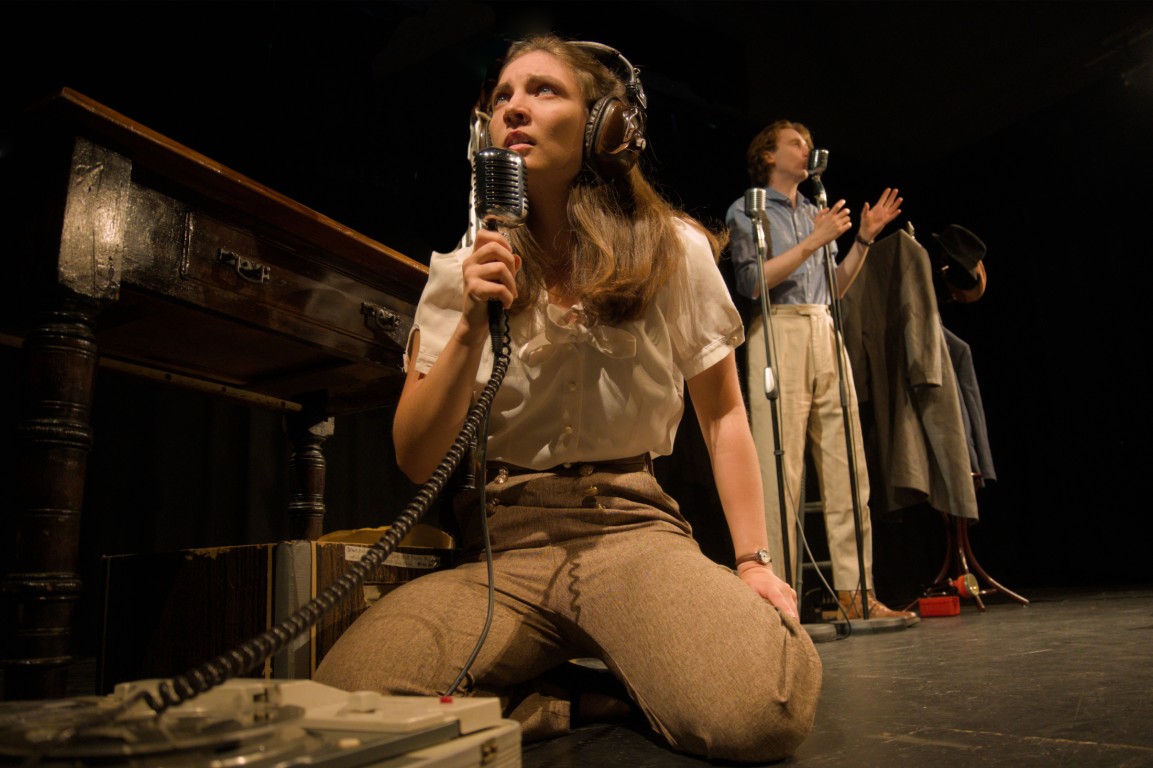
Now, a new play coming to Reading’s South Street next week looks at how an inexperienced broadcaster shared news and information about the natural disaster, on occasion making up the rules as she went along.
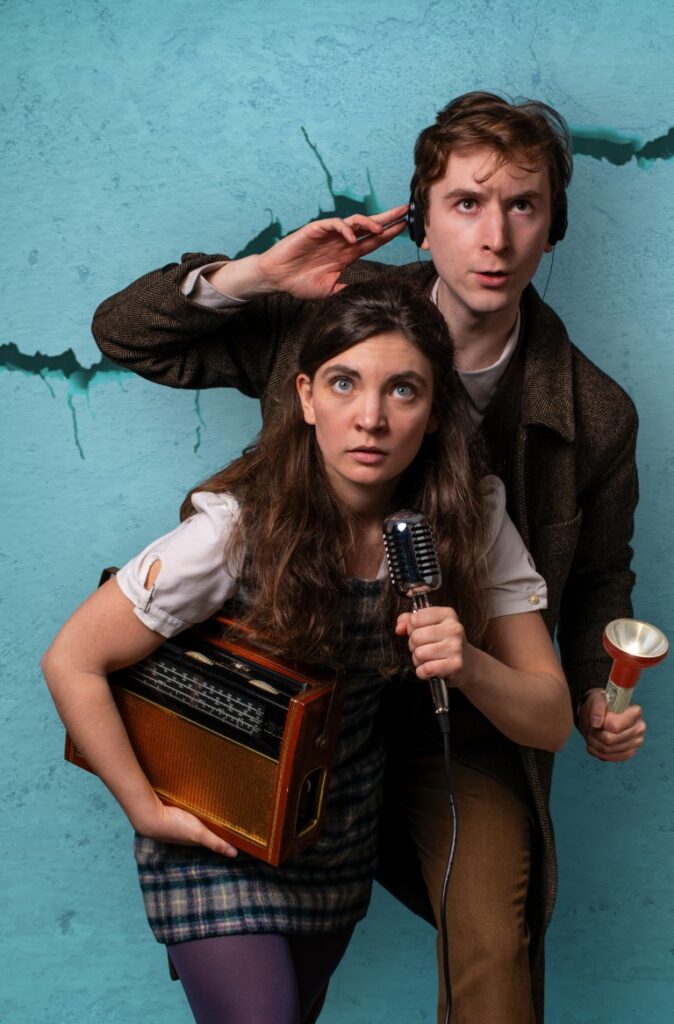
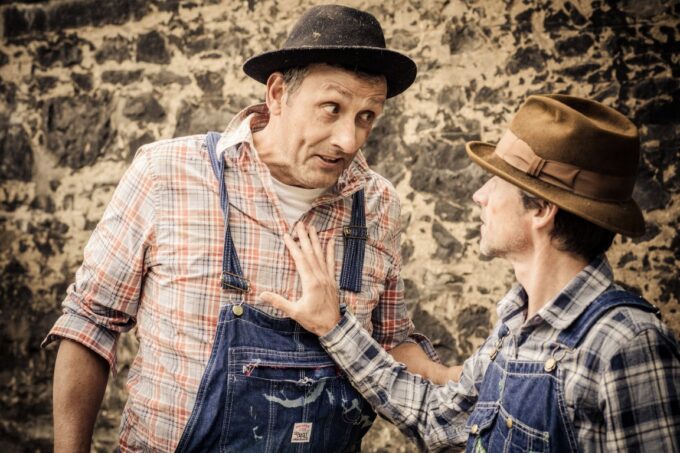
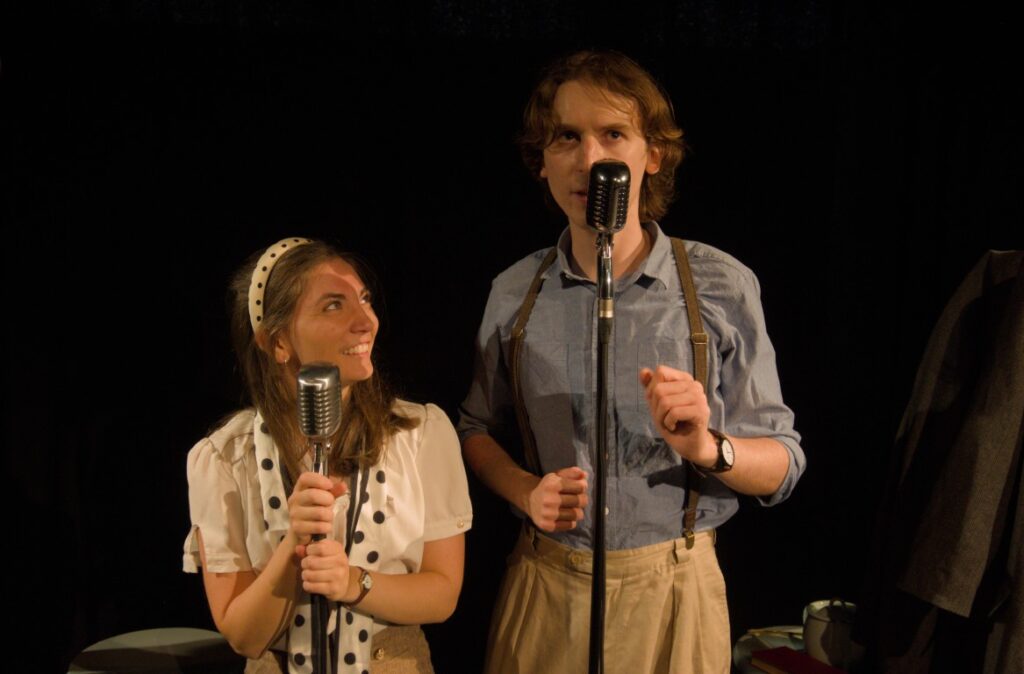
Down To Chance is an hour-long drama that fuses the tragedy with light relief and sees just two people playing different roles throughout.
It tells the story of Genie Chance, a radio reporter who kept on the airwaves during the aftermath of the 1964 Alaskan earthquake – the strongest ever recorded in North America, and the second strongest in the world to date.
This is a show that celebrates the golden age of radio, and explores the importance and impact that good local media can have when it comes to bringing communities together. In this case, it saved lives.
Down To Chance had rave reviews during a sold-out run at the Edinburgh Fringe, and a spell in London’s Pleasance Theatre earlier this year. But for the show’s star and creator, Ellie Jay Cooper, the five-star notices aren’t as important as the audience feedback.
“We had people come from Alaska to see it,” she says. “They said they’d never seen anything about this huge earthquake but their grandparents remember it, or their mum was a child at the time and the play is really accurate.”
And there has also been some really helpful feedback: “There was one person who said, ‘You’re pronouncing this town wrong’. Thank goodness – we wouldn’t have known otherwise,” a relieved Ellie says.
“Generally, people are saying it’s really accurate and really treats it with the respect and care it needs, which as a writer is amazing.”
Virtually anyone can connect with the story, even if they didn’t experience 1964 firsthand – which, let’s face it, applies to most of us – as Ellie explains: “There is something for everyone in it because it’s about a community, a town. You can see, whatever age you are, something of yourself. For example, the teenage intern is growing in and learning confidence for the first time. Genie is a mum and there are difficulties she is going through. There’s a lovely older ham radio operator … there is something for everyone.
“People have different moments or favourite characters.”
And that is something that is easy for Ellie to understand as she and Robert Merriman play nearly 30 characters between them. That’s an immense number of costume changes in a 60-minute play.
“It’s a lot of really fast changing of hats, jackets and items of clothing,” Ellie admits, adding that “the real joy of the piece” comes from the audience following the action through the different characters as they appear.
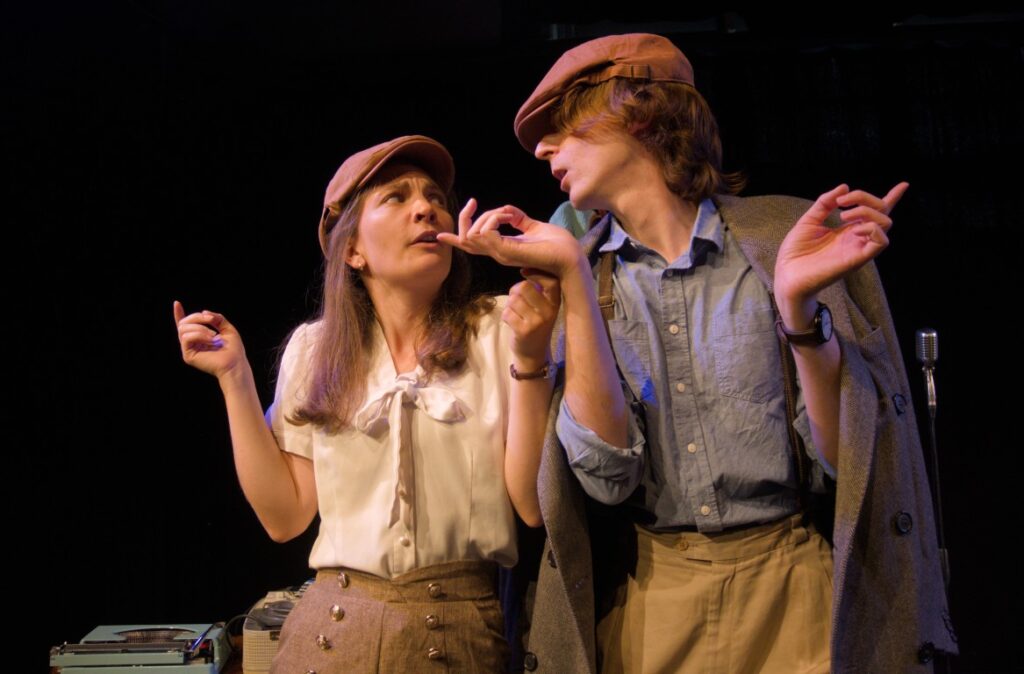
The show is an immersive experience and uses carefully researched props including vintage radios to ensure it is as authentic as possible.
“I did lots of research using the Alaska National Archives and loads of YouTube recordings,” Ellie explains. “Because Genie was a radio journalist, she had an incredible awareness of the historic news of the crisis and archived all her notes and recordings. When discovering the story, I went into a research deep dive. There are hours of real audio of her interviewing people at the time of the quake and in its aftermath.”
This led to a first draft of the play that was, as Ellie admits, too research-heavy. The revisions helped strip it down to its bones in order to create something that is captivating audiences including South Street’s, which is playing to a full house.
The process, which included workshopping various strands that run through the play, was intense.
“I have so many colour-coded notes of different characters, and tracks as the scenes are quite short. It’s quite filmic in style, and there are lots of snap cuts between things,” she says.
This means that everything that happens on stage has to be carefully choreographed.
“There’s lots of if you pick up this teapot, it goes down here, and this hat here. Now I’ve done it so many times, I move without thinking, so it almost feels like a dance in itself.”
The show gives audiences an opportunity to reflect on the importance of journalism, particularly local journalism and how it has changed over the decades. Reading, for example, has a massive gap where the Evening Post once sat. Has Ellie reflected on this change?
“There’s a moment in the play where Genie gets some news and she has to decide whether to share it with her listeners or not. There is a real audio recording of her describing getting this piece of news and deciding what to do. I won’t spoil it, but I remember listening to this and thinking, how on earth would you, why would you make that decision?”
Ellie feels there are modern parallels with the Covid-19 pandemic, when politicians had access to information and had to decide what to share with people enduring lockdown.
“They have so much power because of that,” she says. “Everyone else is in their own homes waiting for news and updates.
“Genie is on the radio, she’s got this information and all of those people are in their homes waiting for updates. We are still living through this, we are still having those conversations.”
Writing and starring in her own show is always a thrill for an actor and Ellie’s eyes were opened to this type of theatre when she was a teenager. It was her Eureka moment.
“There was a school trip to see a fringe theatre piece from Rash Dash, they did a two-hander about the Ugly Sisters, a kind of feminist theatre. It was the first time I’d ever seen something that wasn’t like a big glitzy musical: this was made by the performers, it was fast, it was different and I was absolutely transfixed.
“I was like, ah! That’s what I want to do.”
This led to her studying for her degree … and then Covid hit, which led to Ellie starting the research for what has become Down To Chance.
“We really care about making theatre that is exciting and entertaining for people that might think they don’t like theatre, they think it can be boring or a bit slow.
“It’s theatre for people who don’t see themselves in a theatre.”
And that’s what’s happening. The sold-out sign is popping up across the country, including her visit to Reading.
“We’re so excited, we’ve never been to South Street before. We’ve got an absolutely packed audience – they’ve had to add extra seats. This is so exciting and we cannot wait to come.
“It’s the first day of our tour as well, so it will have a lovely energy and boost to kick us off.”
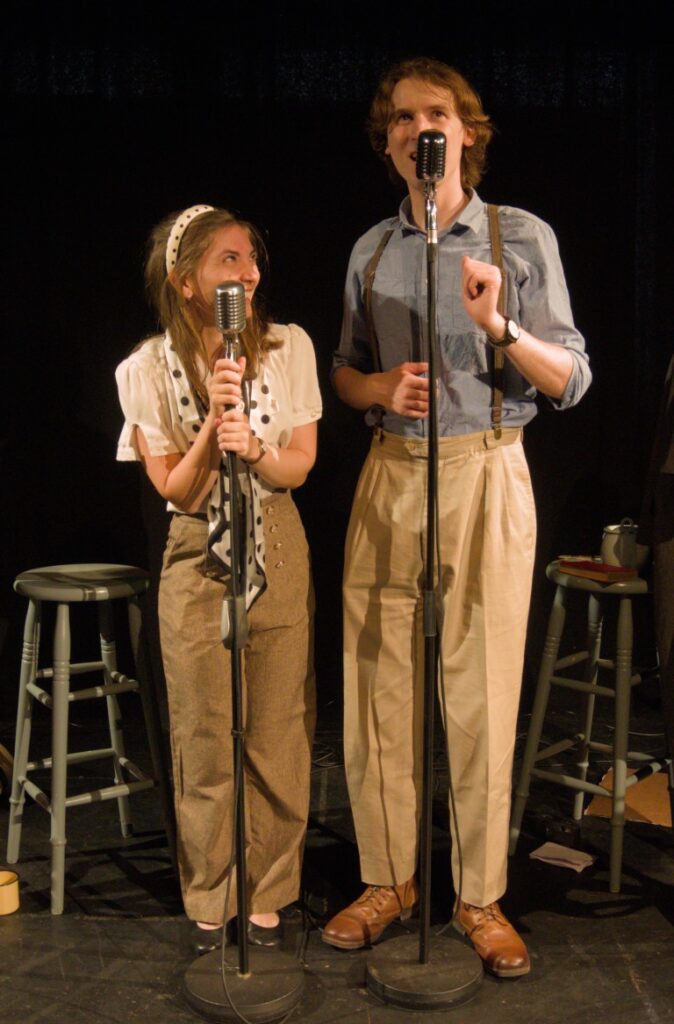
The tour gives Ellie an opportunity to travel to parts of the country she’s never been to and she can’t wait, saying she loves exploring new places.
“I love ending up in a different city every day, getting to wander around, seeing a new town, a new place and to take the show to really different audiences in different kinds of theatres, with their own audiences of different ages or backgrounds or groups.
“It’s exciting and I can’t wait.
“There is something super fun about it: you get into a van and drive to the next venue. I love it, I’m having a great time.”
The Down To Chance tour is also a big step up for Ellie and her colleagues from the theatre company Maybe You Like It: it’s the longest time they’ve been on the road.
“We’ve toured with our previous two shows, but with this one, we want to get it to so many more people than ever before.”
What would her teenage self have made of it?
“She would be going crazy,” Ellie laughs. “It’s a lovely thing to look back and remind yourself of these things as you’re always busy, always thinking what’s the next thing and how do we keep building on what we’re doing. But it’s great to look back and reflect on all the work that it has taken to get to this point.”
So why should people come and see Down to Chance when it comes to their local theatre? Ellie promises a show that will be an entertaining, fast-paced hour of fun drama.
“You will be taken on a journey with these characters. You will watch them change, transform and work together, lifting each other up. These characters and their story – which is real and incredibly true – will leave you with a question or a little thing to take away from your own life about who we are when we have to step up in a crisis, and how we work together.”
When is Down to Chance coming to Reading and Newbury and how can I get tickets?
Down To Chance is coming to Reading’s South Street on Tuesday, 6 October.
The show starts at 8pm and tickets have already sold out. Some returns may be available and they cost £16 or £14 for concessions.
For more details, call the Reading Arts box office on 0118 960 6060, or log on to whatsonreading.com/down-to-chance
The show then comes to Oxford’s Old Fire Station on George Street on Thursday, 15 October. Curtain up is at 8pm.
Tickets for this performance are £15, pay more £20, and £10 for pay less.
For details, log on to www.oldfirestation.org.uk
A third opportunity to see the show will be on Thursday, 22 October as the show arrives at the Corn Exchange in Market Place, Newbury.
Tickets for this show cost £16.25 or £14.25.
For details, or to book, log on to: cornexchangenew.com.
The show will also come to North Finchley: visiting artsdepot in London’s Nether Street on Saturday, 24 October.
Tickets for this show cost £19, and can be booked from artsdepot.co.uk
Get Cheeselogs in your inbox!
Sign up to our weekly newsletter for the latest posts, news and surprises. It's completely free, and goes straight to your inbox.
You may be asked to complete a puzzle, and will be sent an email asking you to confirm your subscription, and you can unsubscribe at any time.