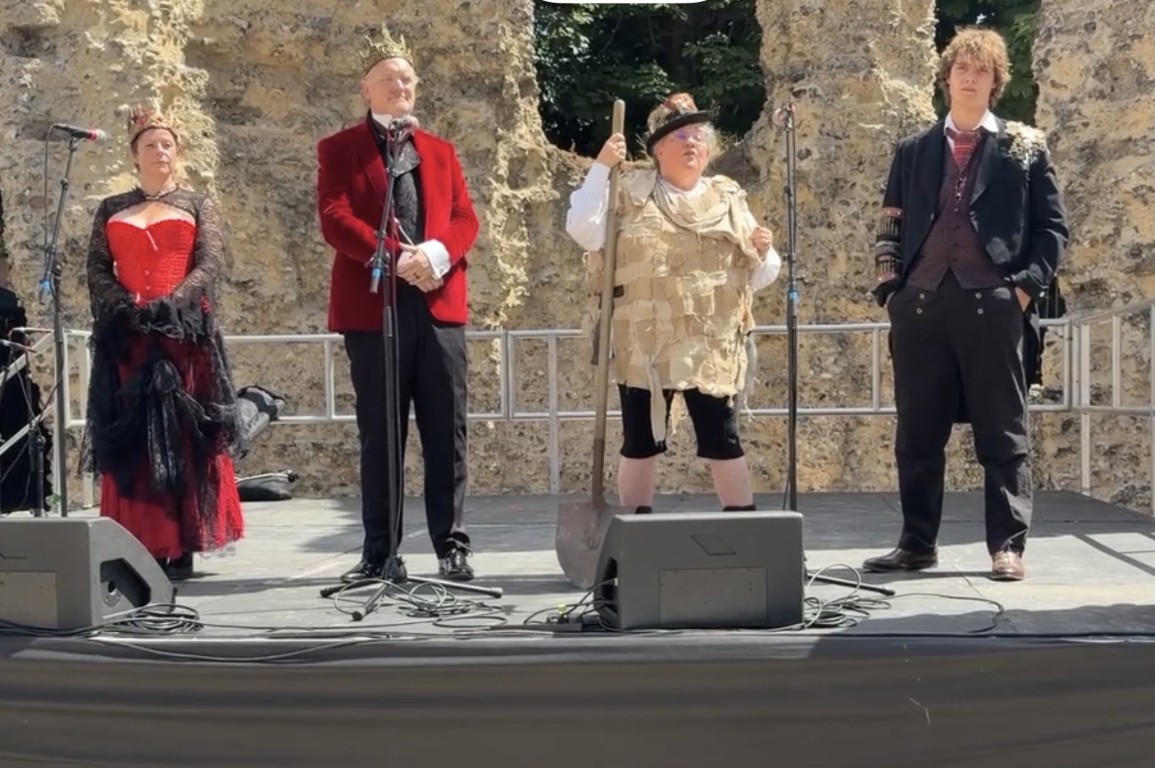
Reading is a town with traditions; among them is the Open Air Shakespeare. For many years it has been performed in the Abbey ruins, where it returns this week.
Progress Theatre is presenting an abridged version of Hamlet, and audiences will be flocking to the historic ruins for the tale of court intrigue … with a distinctly Steampunk flavour. This is Denmark as you’ve never seen it before. This is a prince and his woes given a fresh take. And it all takes place in a near-contemporary venue at Reading Abbey.
“Hamlet is in many people’s view, and probably including mine, the greatest play ever written,” director John Goodman explains. “It’s always exciting to get involved with it in any way. As both an actor and a director, I realised I’m never going to get to play the Dane, so it’s very exciting to be directing it, and particularly since, in all the looking on 30 years, if not more, that Progress Theatre has been involved in Reading’s open-air Shakespeare, we have never done Hamlet, so this is a first.”
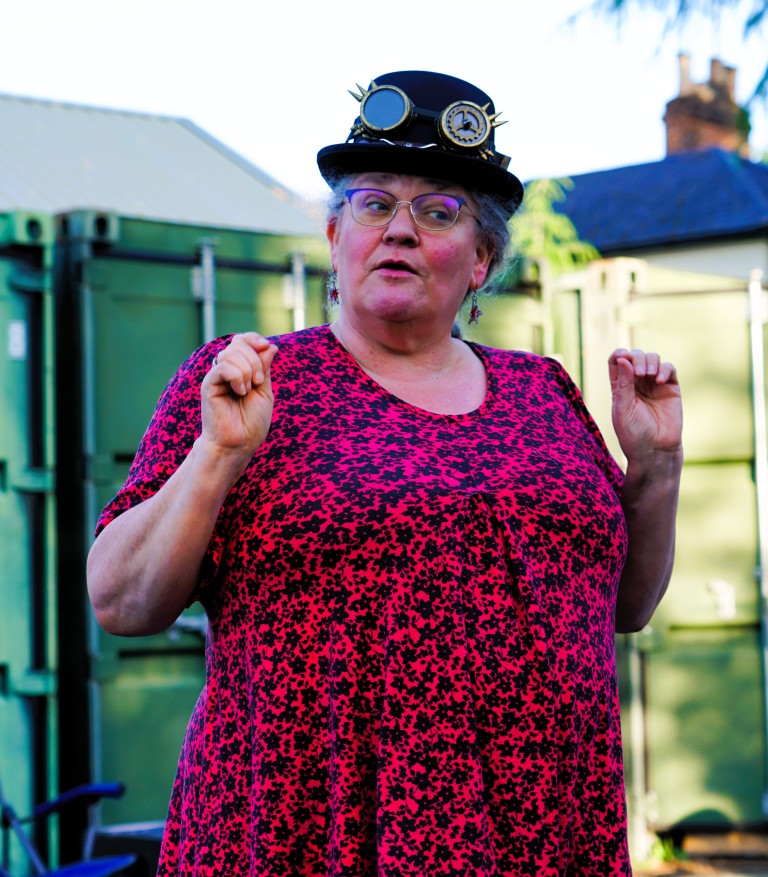
The production marks a return for Progress Theatre after a fallow year – “volunteer fatigue” John says – adding that everyone involved insisted that they must return for 2026, as the summer staging is a vital part of the company’s identity. There is no chance of letting this almost annual tradition lapse; after all, the play’s the thing … whatever the weather.
When the play is performed, between 15 and 25 July, it will be the culmination of more than 18 months’ work. It started with John adapting the text so it would work for the outdoor setting.
“When I was proposing Hamlet to our programme planning committee, I speculated that one of the reasons why we’ve not performed it before is that the whole text is very long. When you do it all, as our patron Kenneth Branagh did in his famous film, it runs for four hours. We don’t want to keep people in the Abbey ruins until midnight, so we’ve distilled the key themes from the text. We think we’ve got it down to under two-and-a-half hours,” he promises.
To achieve this, there have been some adjustments, focusing on Hamlet and Ophelia’s families and their grief, and removing political subplots such as the Norwegian invasion.
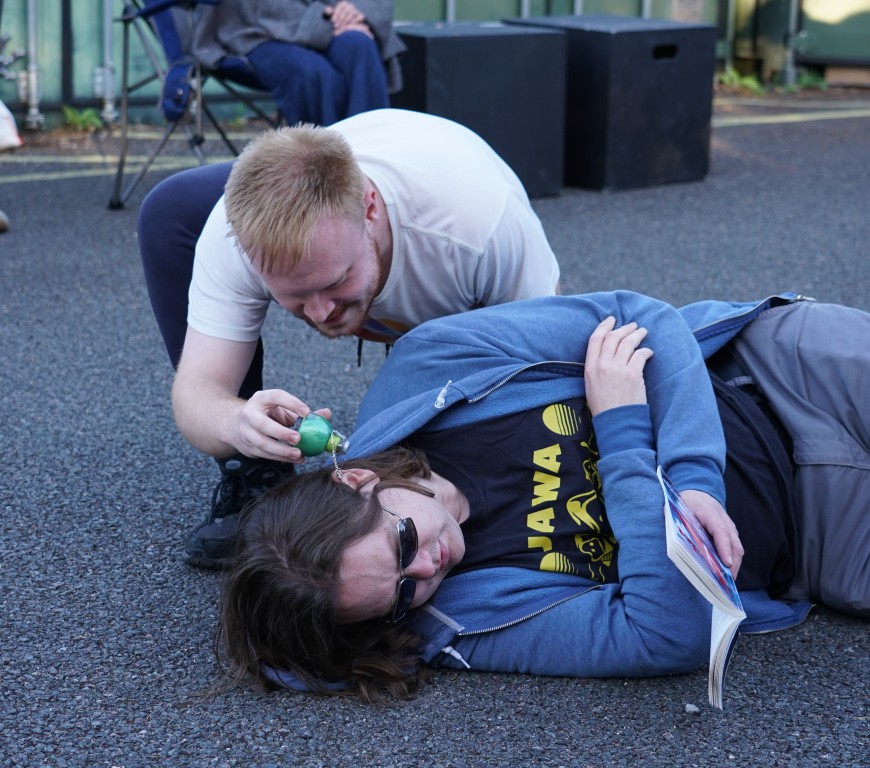
“Both Hamlet and Ophelia end up with what today we would call pretty severe mental health problems, so we’ve taken out anything that doesn’t really play to that theme, but still managed to retain all the well-known speeches and the big set-piece scenes, so it will still very much recognisably be Hamlet,” John says.
Well, the play might, but the look of the production will be in keeping with the historic backdrop of the Abbey ruins: part ruined monastery, part verdant gardens, part backdrop to the modern Reading. John is aiming to avoid a Tudor play where the cast would have worn ruffs, cod pieces and baggy trousers.
“I sat down with the costume people and said I would like designs that place it outside of real time, and we’ve come up with steampunk,” John says. “So there’s that sort of metaphor of the Kingdom of Denmark being a machine that’s breaking down, and we have lots of cogs and wheels.”
A younger dynamic for the royal family
Hamlet dates back to the end of the 16th century and the start of the 17th. One of the beautiful things about Shakespeare’s work is that while it is timeless, many directors have made their mark on it by taking his texts in new and surprising ways.
While John is trying to stay faithful to the script even in its abridged form, there are some changes. To make the production even fresher, it features a much younger cast than usual. Dylan Collie, 22, plays the title role of a university student struggling to cope with his emotions. Amy Taulbut plays Ophelia.
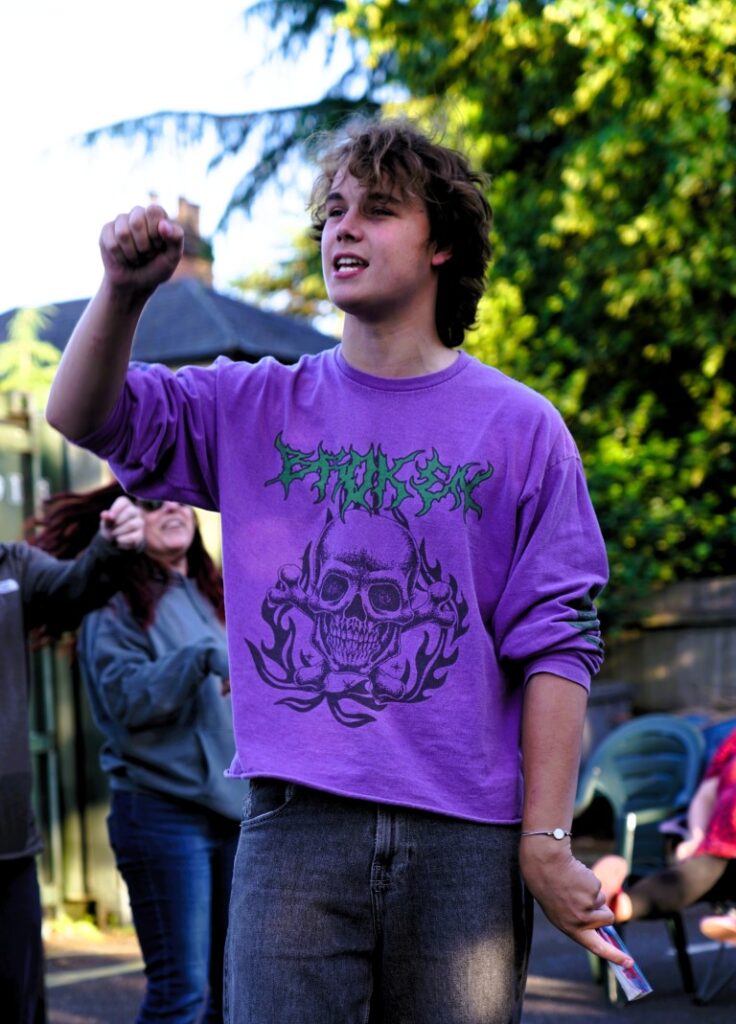
John notes: “When you make Hamlet younger, then you can make Ophelia younger, and you can make his parents a bit younger as well. One of the things I wanted to have was a glamorous Queen Gertrude, and the whole motivation for Claudius wanting to seize the throne and marry Gertrude is a lot more apparent.”
Setting the play amid the ancient stone walls of the former Abbey brings its own special atmospheric advantages, offering the actors immediate physical references.
John explains: “There are some quite resonant lines, so there’s one point Hamlet tells Rosencrantz and Guildenstern that Denmark is a prison. We suddenly realise you’re overlooked by a prison, there’s Reading Gaol right there. The setting helps add another layer to the atmosphere.”
John believes the Progress Theatre’s adaptation offers something for everyone, whether they are a lifelong Shakespeare enthusiast or a complete newcomer to the tragedy.
“If you don’t know Shakespeare and are a bit sort of nervous about it, we think this is a great introduction,” he says. “You hear all the big speeches, but we’ve tried to make it as easy to follow and as entertaining as possible.
“If you do know Shakespeare and are familiar with the play, I think it will give you a chance to see something new.”
When is Hamlet coming to Reading, and how can I get tickets?
Hamlet runs from Wednesday, 15 July to Saturday, 25 July 2026 at the Reading Abbey Ruins.
The performance has a running time of 2 hours and 45 minutes, including a 20-minute interval.
Tickets range from £23.72 to £37.73 for adults, and from £20.48 to £34.50 for concessions, with all booking fees included.
Audiences are welcome to bring a picnic to enjoy during the open-air performance.
For more details, or to book, log on to: https://whatsonreading.com/venues/progress-theatre/whats-on/hamlet-reading-abbey-ruins
Get Cheeselogs in your inbox!
Sign up to our weekly newsletter for the latest posts, news and surprises. It's completely free, and goes straight to your inbox.
You may be asked to complete a puzzle, and will be sent an email asking you to confirm your subscription, and you can unsubscribe at any time.