
In 2004, at the Super Bowl halftime show finale, 23-year-old Justin Timberlake ripped off 37-year-old Janet Jackson’s top. Her breast was exposed on screen for just nine sixteenths of a second – quite literally the blink of an eye.
The fallout from this nearly invisible moment was immense.
For many years, it derailed the career of a pop icon and role model for many black women, while Timberlake’s thrived, with McDonald’s continuing to use his ‘I’m Lovin’ It’ jingle, and he bought one of the first social media networks, MySpace, in 2011.
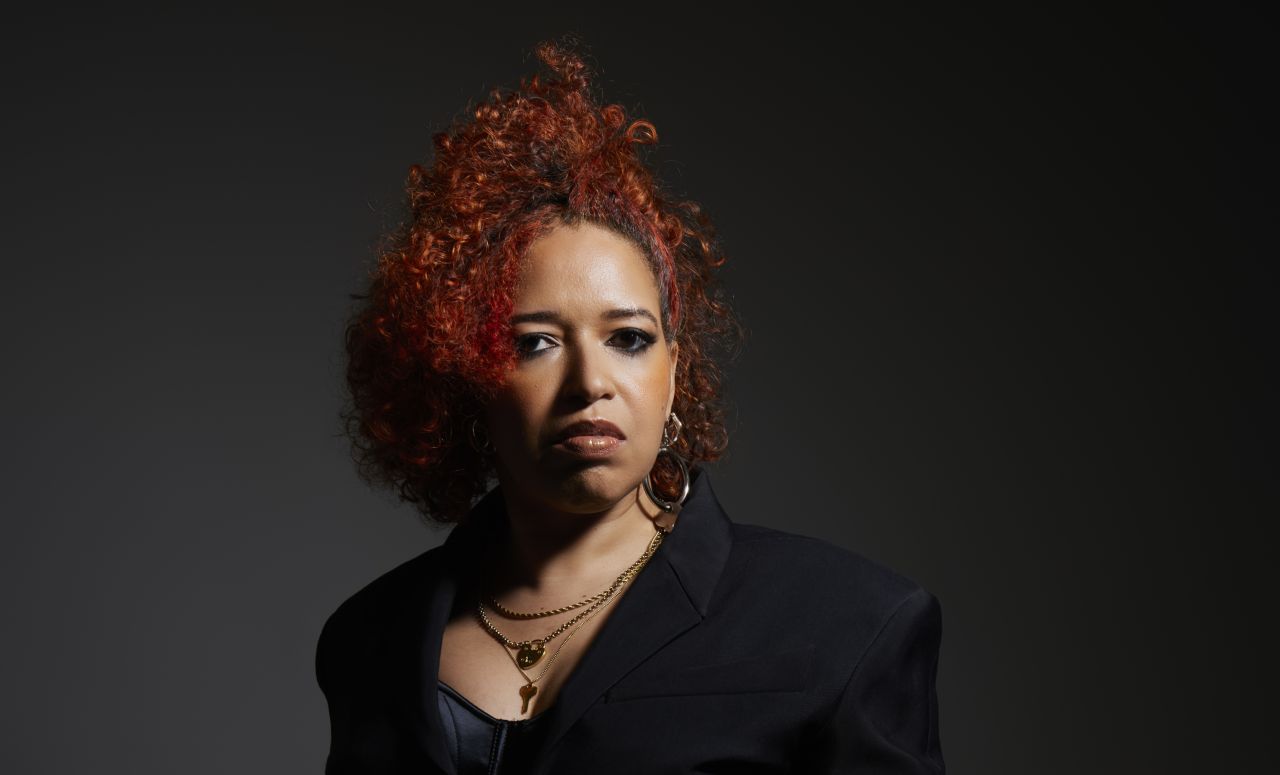
Who was invested in the backlash? What does all this have to say about the demographics of who controls the media, and the ways in which black women are scrutinised in the public eye? These questions and more are covered in Paula Varjack’s Nine Sixteenths, an intriguing tale of redemption and reclamation.
The play aims to demonstrate how Janet Jackson helped shape our contemporary cultural landscape, paving the way for artists such as Britney Spears, Beyoncé, and Rihanna – and shows how a struggling video-sharing site called YouTube began attracting clicks when it became the place to rewatch the incident.
Paula’s show uses a visual variety of devised theatre, dance, lip sync and British Sign Language to journey through three acts that use this moment in time as the catalyst: This is a story of how 140 million viewers witnessed a moment that became a cultural flashpoint, how that moment continues to resonate 22 years later, and explores a very personal response to it.
After premiering with a two-week run at London’s Pleasance Theatre, the show is currently on an extensive UK tour, including a visit to South Street Arts Centre, culminating in a 10-day run at London’s Brixton House.
Reclaiming the narrative through a pop culture lens
Nine Sixteenths – an ensemble piece that contains strong language and references to sexism and racism – has been several years in the making. And it might never have happened had Paula not been attending a music festival.
“The idea has been gestating since 2019. I was at Glastonbury hosting the open mic for the poetry and words stage, and Janet Jackson was a headliner on the Pyramid Stage,” she recalls. “It was, believe it or not, her first time performing at Glastonbury, which I find wild given her stature as an artist.”
Paula had never seen Janet sing live, despite being a childhood fan. She admits that she had “drifted away” from her music for no reason other than other music appearing in her orbit.
“Then I saw her at Glastonbury and was so taken away by her as a performer. There is this thing about artists who are so iconic that when you see them, you genuinely can’t believe that you’re seeing them – but also you have this sense of being intimately familiar with them somehow, because you’ve seen so much imagery of them.”
The performance inspired Paula to take a deep dive into the artist’s history, leading her to realise how much of Janet’s work had been overlooked following the 2004 incident.
“Glastonbury instantly brought back to me all these albums that I had deeply loved from the time I was a child, well into my early teens, and so I sort of came away from that performance going: oh my – what an incredible artist.
“I vaguely remember what this wardrobe malfunction incident was, but I hadn’t watched at the time. I just remember finding the whole debate around it really uninteresting and kind of gross, and not really engaging with it. Suddenly, after seeing this performance at Glastonbury, I was kind of left thinking: ‘Yeah, that was weird, wasn’t it? Like what happened after that?”
Paula said she had assumed that split-second moment, barely seen by the rest of the world, had been the end of Janet’s career, but in the 15 years since the Superbowl show, Janet had created “a huge output of work”, including several albums. Paula says: “I thought, gosh, how did I miss all that?”
And that led to the germ of the idea that became Nine Sixteenths, but it could have been very different. Originally, Paula envisaged a solo performance: “I was interested in making a show that told the story of whether one could ever control one’s narrative as a public figure and as an artist. We put things out, and then journalists might write about it, or fans might have their own take.
“Can anyone control their narrative, particularly a public figure?”
Like so many projects, the covid pandemic and lockdowns six years ago brought the initial work to a halt. But that helped Paula hone the idea and turn it into something different.
“I had a very big year planned for 2020, which was obviously then disrupted,” she recalls. “I suddenly had a lot of time to consider this Janet Jackson project, what it might mean.”
A senior producer from theatre company Complicité contacted Paula two years later to ask if they could develop a project with her. That support spurred her research for Nine Sixteenths, and included some developments that shocked her. This, in turn, led to the touring show that tackles sexism and racism.
“I started to discover some really, really awful and quite horrifying events and people who were actively involved in this backlash. As soon as I became aware of that, it became not just an idea that I wanted to make, it was of vital importance that I told this story,” she explains.
The creative process involved extensive research. Visitors to her home could have been convinced they’d walked into a crime investigation, where suspects, motives, venues, and clues are laid out on a large board and connected by pieces of string. Paula admits to investing in a lot of Post-It notes to help piece together the various strands and ensure the show came together.
“I work a little bit like a documentary filmmaker, working out threads, different lines of information or timelines. I was interested in the rise and fall and rise again with Janet Jackson, but that also kind of brought up the rise and fall of MTV, and subsequently the rise of social media and the internet,” she says.
“The first Research and Development week was like a wall of crazy. It’s just a room of literally hundreds of Post-It notes, and me trying to figure out connections. It’s quite overwhelming for anyone who’s not in the same space as me but as I share these threads of inquiry with people, I eventually start to discover the elements I keep coming back to.”
Representation and the power of the black female ensemble
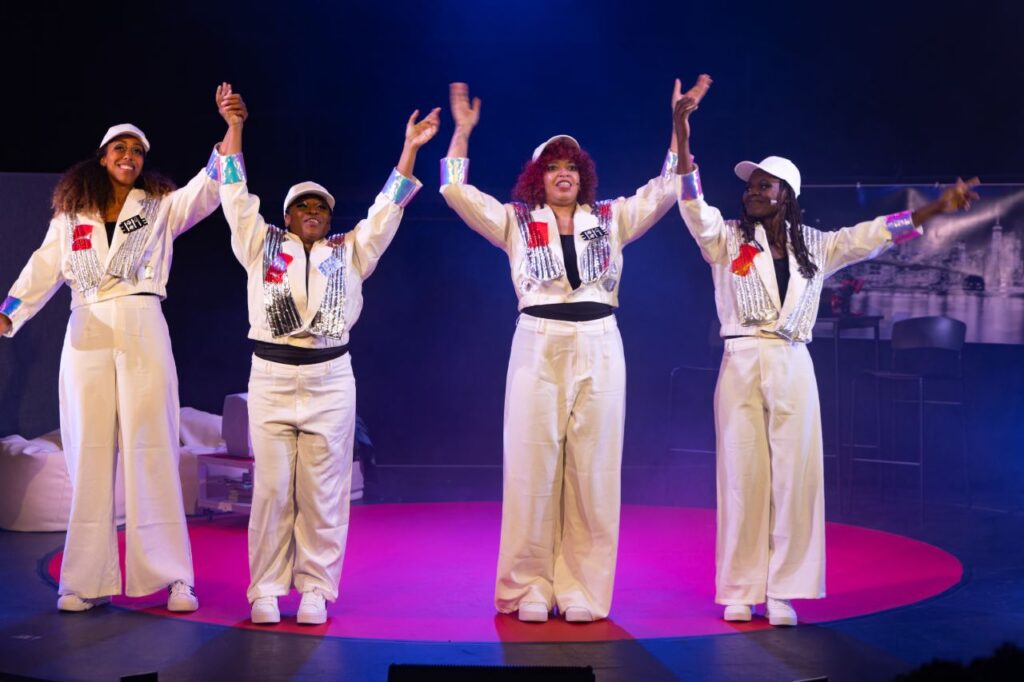
As she explored the concepts and evaluated the type of show she wanted to create, the planned solo performance evolved into an ensemble featuring four black female performers: Pauline Mayers, Endy Mckay, Julienne Doko and Chia Phoenix. She says it quickly became clear that Nine Sixteenths couldn’t be just her on stage.
“Janet Jackson never performs on her own; she always has an ensemble,” Paula explains of the change in direction. “This is also about a subject that is really expansive, essentially: what does it mean to be an older black woman facing racism, sexism and ageism all at once?”
But Nine Sixteenths isn’t just about the Super Bowl and the fallout from that short moment, as Paula makes clear: “The show is absolutely the story of what happened to Janet Jackson, but it’s also my own story of being a child, being a fan, getting into performance, and then a kind of collective conversation between me and my extraordinary ensemble, all black women, age 40-plus, about our hopes and aspirations and fears as black female performers in our respective industries.”
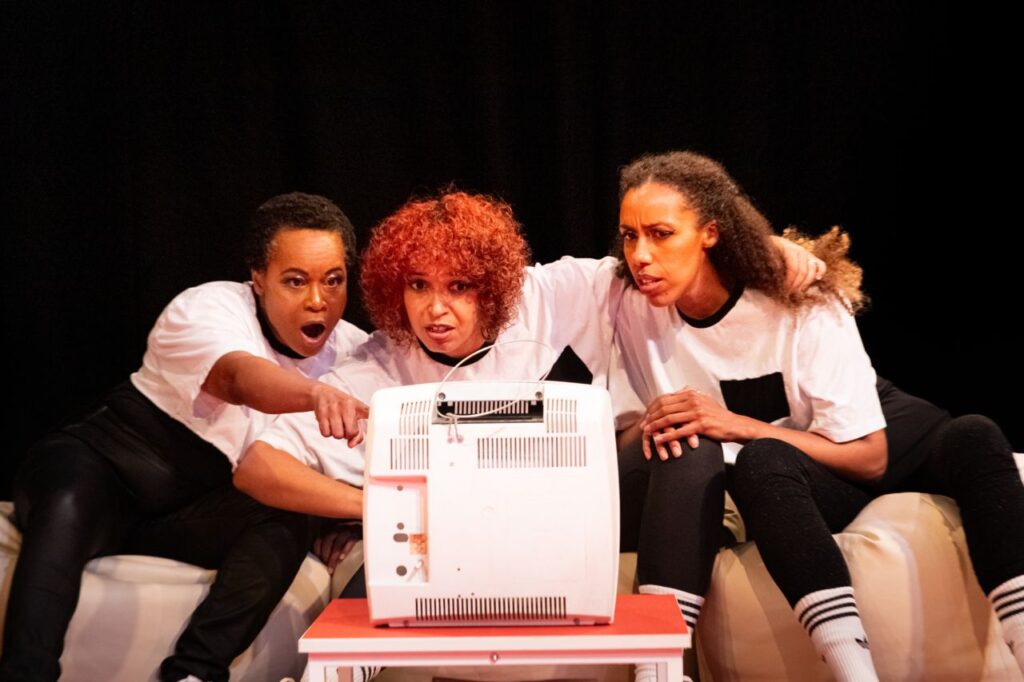
The production uses pop culture as a vehicle to discuss complex social issues, something she feels is a useful touchstone, as many remember when certain events happened: “Maybe it could be the wardrobe malfunction. Maybe 20 years from now, we’ll say: ‘Oh my gosh, do you remember that Coldplay concert?’” – where a CEO and an HR executive of a tech firm were seen hugging during a ‘kiss cam’ moment, leading to their resignations – “Those are moments we can point to and remember. They also open questions about how we connect and relate to each other in the world,” Paula adds.
“For Nine Sixteenths, it’s sort of a Trojan horse. If I say I want to make a show that is about solidarity between black women and empowerment and the intersectional issues of racism, sexism and ageism, I am sure there is an audience for that, absolutely. But if I say I am making a show about Janet Jackson and what happened to her during that wardrobe malfunction, and about my relationship to her as a child and as a fan, I will reach a much larger audience. Then, when they are in the room, I can take them on that journey to talk about those questions I want to as well.”
“I like work that makes me feel and makes me think, but can find a way to entertain me as well. That is what life is. Life is about having hardship – deep hardship – one day, and yet still being able to laugh another day, and sometimes laughing and crying all at once. That’s what I want my work to do.”
Paula feels that Janet Jackson was doing the same with Rhythm Nation. This album included a 30-minute film on MTV that showed two aspiring musicians whose lives are disrupted by substance abuse. This addressed social issues and saw her use pop music and video as a vehicle to reach the widest possible audience.
Nine Sixteenths was first performed in 2024, and this is a newer version. But has Janet Jackson seen it? If she did, what would she make of it? It’s a question that Paula says she thinks of all the time, not least as the musician has been clear she does not want people to revisit the wardrobe malfunction.
“She has been very, very vocal about not wanting anyone to revisit this moment – for very good reason,” Paula says. “I fully understand that; it’s unfair that it continues to be a relevant cultural moment, considering how much she achieved in the 30-year career she had. I’ve had to wrestle with that because I’ve made a piece of work that captures the moment that is in the public domain, but in someone else’s life.
“The reason I have given myself a pass to go ahead with Nine Sixteenths is the larger conversation it sparks – about the challenges older black women face, and the problematic nature of those who are decision makers in media being largely one demographic: largely rich, older, white, straight, conservative men. That impacts all of us.
“Also, in terms of fandom and solidarity for Janet Jackson, I think it makes a very strong case as to why the backlash occurred the way it did, and is also very much in her corner in terms of it being an accident and not a publicity stunt.”
Accessibility and the irresistibility of the revolution
The 2026 tour features British Sign Language fully integrated into the show, with an interpreter performing as a core member of the ensemble. This helps deaf people enjoy a night at the theatre.
Paula explains: “Vinessa is part of the cast. She is not tucked in the corner. Because the show has lots of sound bites and pop music, everything that is pre-recorded is presented within the video design by Cherie Gordon, who is a black, deaf female actress who works in TV and film, and then everything that’s live is with Vinessa.
“What that means is a deaf audience gets a similar experience to the sounds that a hearing audience would. We’ve had deaf audiences at the majority of our shows, and, talking to deaf audiences, they are very excited by it.”
The show has been reaching diverse audiences across the country, often leading to unexpected feedback.
Paula says: “Initially, I kind of thought there are so many ways I feel invisible as a black woman in her 40s in this industry, and I want to make myself and people like me super visible. But what happened in that run is in leaning into the specifics of that, we discovered that there were all these other audiences that really connected with the work as well.
“Women in general found the work really inspiring. Younger people and younger artists found it inspiring to look at older artists. It clearly strikes something really deep in them.”
And the reaction has been helped by Paula appearing on the BBC Radio 4 show Women’s Hour. She says people are booking tickets and travelling across the country to see the show: “There was a woman in Wolverhampton who said: ‘Oh, I heard you on Woman’s Hour. Keep fighting the good fight. This is a fantastic piece of work, and I really loved it.’”
Paula remains committed to the craft of theatre as a tool for change and the importance of representation: “I can never not be aware of how me just being in a space will make someone else who is like me in some way think: ‘Well, I can do that; I could do that too’. It is actually very important within the show itself.
“I was a child watching MTV, and the first black woman I saw who had this really exciting aesthetic and sense of working with visuals was Janet Jackson. That made a very strong imprint on me. I am really, really hopeful that by Nine Sixteenths being an ensemble with a cast that is particularly invisible in terms of age, race and gender, that someone is watching it, going: ‘I am now going to do this next’. That is sort of the point.”
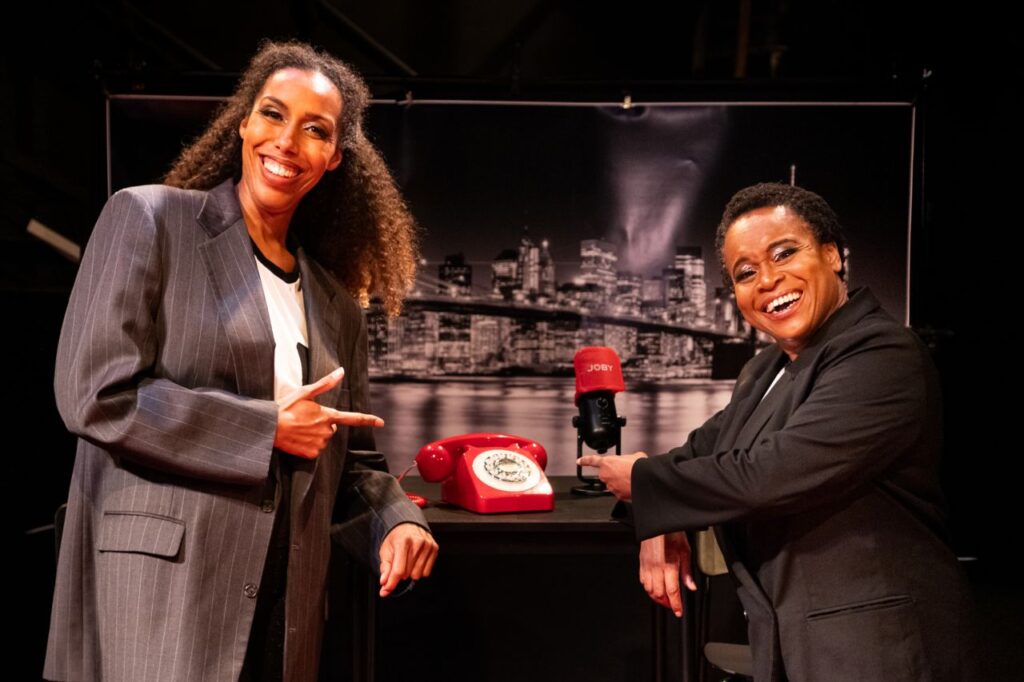
Paula draws on recent pop culture spectacles for inspiration in her philosophy of artistic revolution: “I really, really passionately believe in the power of being entertaining. I don’t want to make work that’s solely entertainment, but I believe it is really important that it’s entertaining, because that is what will make it land. Otherwise, I would be a politician!”
She cites the most recent Super Bowl halftime show, starring Bad Bunny, as an example of this entertainment with a point: “It’s the job of the artist to make the revolution irresistible. And the thing to me about that Bad Bunny performance is it’s just a really fun, exciting, vibey, sexy 11 minutes. But as you start to go: why this?, and why this visually?, suddenly you unpack some of the history about Puerto Rico because you’ve watched this spectacle.
“It’s because he is doing both (entertaining and educating), and I want to do both.
“I believe Nine Sixteenths is a show that is a really good night out. It’s a really well-performed, slick, fun, energetic, funny night out, that asks some really big, deep social questions that are pertinent to this period of time that we are in.”
When is Nine Sixteenths coming to Reading, and how can I get tickets?
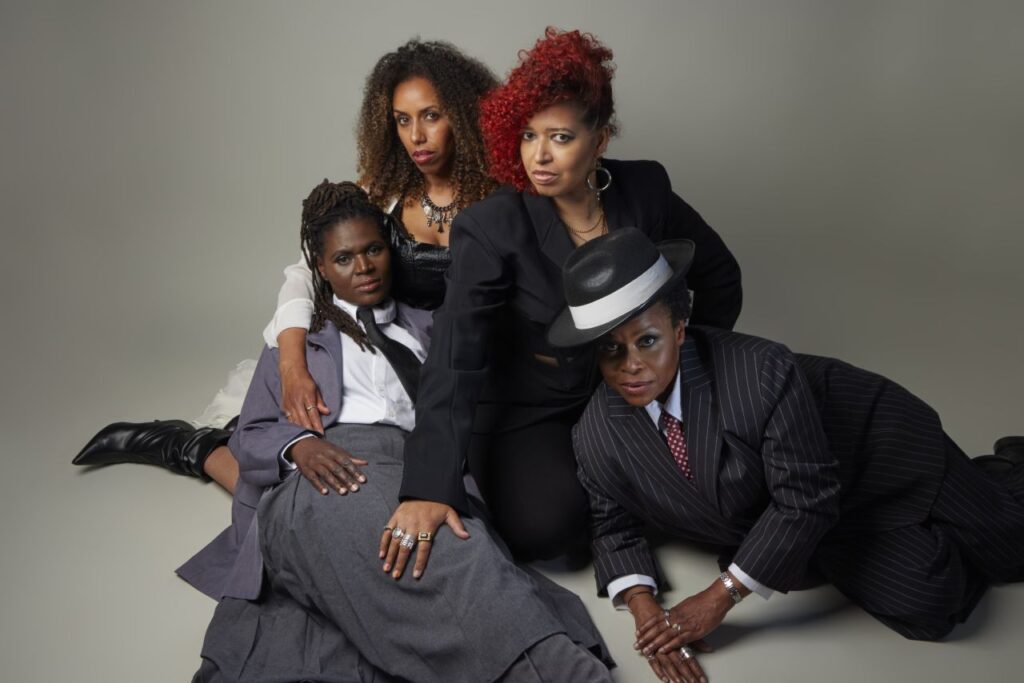
Nine Sixteenths will be performed at South Street Arts Centre on Wednesday, 11 March 2026. The performance begins at 8pm and runs approximately 70 minutes, with no interval.
Tickets are priced at £16, or £14 for members. The show contains integrated British Sign Language and features content warnings for strong language and references to sexism and racism.
They can be booked through the Reading Arts box office by calling 0118 960 6060 or by logging on to: https://whatsonreading.com/venues/south-street/whats-on/nine-sixteenths
Get Cheeselogs in your inbox!
Sign up to our weekly newsletter for the latest posts, news and surprises. It's completely free, and goes straight to your inbox.